Timewatch - Season 34 / Year 2017

Season 34 / Year 2017
A Timewatch Guide

Episodes
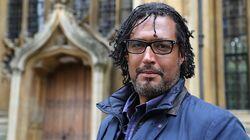
British Empire: Heroes and Villains
Less than 100 years ago, the British ruled a quarter of the planet and one in five of the global population. Once, people were proud to call themselves imperialists, but now, to many, that seems like a badge ofshame.
In this Timewatch guide, David Olusoga examines not whether the British Empire was a force for good or ill, but rather how it has been portrayed on British television over the last 70 years.
Drawing on decades of the documentary series Timewatch, plus many other gems from the BBC archive, David sees how Britain's Caribbean colonies grew rich on slave labour, how chaos gripped India post-independence, and how Africa was plundered for her mineral wealth.
David investigates how film-makers through the years have represented the actions and legacy of Britain's period as the world's ultimate superpower. It used to be said that the sun would never set on the British Empire - now, long after it's gone, the arguments surrounding it are very far from being settled.
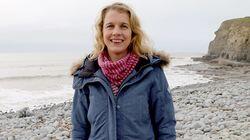
Decoding Disaster
From earthquakes to tsunamis to volcanic eruptions, natural disasters are both terrifying and fascinating - providing endless fresh material for documentary makers. But how well do disaster documentaries keep pace with the scientific theories that advance every day?
To try and answer that question, Professor Danielle George is plunging into five decades of BBC archive. What she uncovers provides an extraordinary insight into one of the fastest moving branches of knowledge. From the legendary loss of Atlantis to the eruption that destroyed Pompeii, Danielle reveals how film-makers have changed their approach again and again in the light of new scientific theories.
While we rarely associate Britain with major natural disaster, at the end of the programme Danielle brings us close to home, exploring programmes which suggest that 400 years ago Britain was hit by a tidal wave that killed hundreds of people, and that an even bigger tsunami could threaten us again.
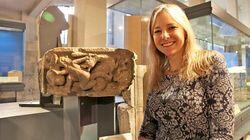
The Vikings: Foe or Friend?
On June 8th 793 Europe changed, forever. The famous monastery at Lindisfarne on the Northumbrian coast was suddenly attacked and looted by seafaring Scandinavians. The Viking Age had begun.
Professor Alice Roberts examines how dramatically the story of the Vikings has changed on TV since the 1960s. She investigates how our focus has shifted from viewing them as brutal, pagan barbarians to pioneering traders, able to integrate into multiple cultures. We also discover that without their naval technology we would never have heard of the Vikings, how their huge trading empire spread, and their surprising legacy in the modern world.

Dictators and Despots
In recent years the world has become an unsettling place, from the mass movements of refugees to political upheaval, both in this country and abroad.
Disturbingly, history shows that it's at unsettled times like this that dictators can rise - leaders who promise they can solve every problem, if only they're granted supreme power.
David Olusoga examines fifty years of BBC documentary archives to try and discover why dictators can have such a powerful appeal.
David uncovers the surprising optimism felt by the West towards men like Gaddafi and Mugabe early in their regimes, and examines the events that turned this optimism into horror. He questions why such men continue to fascinate us regardless of their actions, and asks whether, especially in an age of mass media, our fascination has fed their power.

Explorers: Conquest and Calamity
For centuries the story of exploration has been packed with incredible tales of adventure, but the last fifty years has seen a dramatic shift in our attitude towards explorers.
To find out how television has reflected this, Prof Fara Dabhoiwala delves into the BBC television archives, revealing that the pace of this change was faster than you would imagine. In the 1960s the BBC was still making programmes showing Christopher Columbus as an uncomplicated conquering hero. Barely a decade later, it made a documentary that delved into museum storerooms packed with artifacts brought back to Britain by Captain Cook, focusing on the perspective of the explored rather than the explorer.
As the story of exploration became as much about social calamity as conquest, television has been forced to find new ways to portray explorers. By the 21st century this included everything from focusing on adventurers like Ernest Shackleton, famous not for conquest but for saving the lives of his men, to using new technology to demystify exploration by making programmes from material shot by the explorers themselves.
Recently Updated Shows

The Creep Tapes
Based on a collection of videotapes in the secret vault of the world's deadliest and most socially uncomfortable serial killer, who hires his victims to film him for the day under false pretenses, each episode exposes a new victim from one of the fabled 'Creep Tapes'.

America's Funniest Home Videos
ABC's longest-running primetime entertainment show, America's Funniest Home Videos, returns for season 36 this fall with the same mission -- giving families something genuinely funny to enjoy together on Sunday nights.
"AFV," the longest-running primetime entertainment show in ABC history, returns for season 36 with the same mission - to provide viewers with hysterical moments that fly by at a dizzying pace.

The Real Housewives of Potomac
Just up the river from our nation's capital lies a hidden gem—Potomac, Maryland. Its rolling hills, gated mansions, sophisticated prep schools, and exclusive country clubs all serve to keep the area invitation-only. Sprinkled throughout this community are a handful of old-line, wealthy African-American families who have historically broken racial barriers to provide a life of privilege for their children. The Real Housewives of Potomac follows the upscale lives of six intriguing, well-to-do women: Gizelle Bryant, Katie Rost, Karen Huger, Charrisse Jackson-Jordan, Robyn Dixon, and Ashley Darby, all of whom have fought for their places in this society by way of legacy or marriage. In a town where entry is granted only through class, pedigree, and lineage, how far will these ladies go to secure their spot at the top of this prestigious circle?

The Traitors Canada
Follow a group of contestants – including some familiar faces – who live together as they complete a series of challenges with the goal of earning a cash prize. The catch? Some of the contestants are traitors who will attempt to deceive and manipulate their way to the prize instead of sharing it amongst the group. In this psychological adventure will the traitors be unmasked in time?
