The Civil War - Season 1
Season 1

Episodes

The Cause (1861)
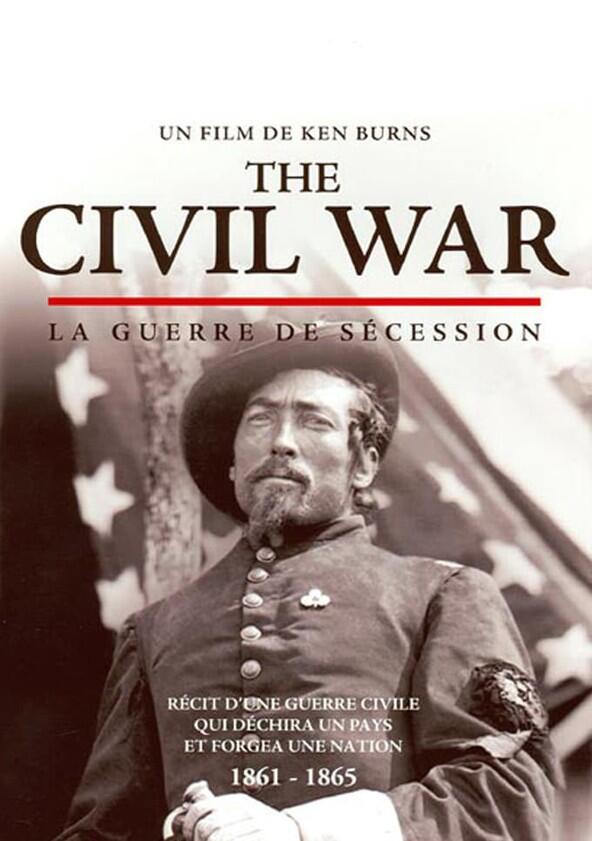
Beginning with a searing indictment of slavery, this first episode dramatically evokes the causes of the war, from the Cotton Kingdom of the South to the northern abolitionists who opposed it. Here are the burning questions of Union and States' rights, John Brown at Harper's Ferry, the election of Abraham Lincoln in 1860, the firing on Fort Sumter and the jubilant rush to arms on both sides. Along the way the series' major figures are introduced: Abraham Lincoln, Frederick Douglass, Robert E. Lee, Ulysses S. Grant and a host of lesser-known but equally vivid characters. The episode comes to a climax with the disastrous Union defeat at Manassas, Virginia, where both sides now learn it is to be a very long war.
A Very Bloody Affair (1862)
1862 saw the birth of modern warfare and the transformation of Lincoln's war to preserve the Union into a war to emancipate the slaves. Episode Two begins with the political infighting that threatened to swamp Lincoln's administration and then follows Union General George McClellan's ill-fated campaign on the Virginia Peninsula, where his huge army meets a smaller but infinitely more resourceful Confederate force. During this episode we witness the battle of ironclad ships, partake of camp life, and watch slavery begin to crumble. We meet Ulysses S. Grant, whose exploits come to a bloody climax at the Battle of Shiloh in Tennessee. The episode ends with rumors of Europe's readiness to recognize the Confederacy.
Forever Free (1862)
This episode charts the dramatic events that led to Lincoln's decision to set the slaves free. Convinced by July 1862 that emancipation was now morally and militarily crucial to the future of the Union, Lincoln must wait for a victory to issue his proclamation. But as the year wears on there are no Union victories to be had, thanks to the brilliance of Stonewall Jackson and Robert E. Lee. The episode comes to a climax in September 1862 with Lee's invasion of Maryland. On the banks of Antietam Creek, the bloodiest day of the war takes place, followed shortly by the brightest: the emancipation of the slaves.
Simply Murder (1863)
The nightmarish Union disaster at Fredericksburg comes to two climaxes that spring: at Chancellorsville in May, where Lee wins his most brilliant victory but loses Stonewall Jackson; and at Vicksburg, where Grant's attempts to take the city by siege are stopped. During the episode we learn of fierce Northern opposition to Lincoln's Emancipation Proclamation, the miseries of regimental life and the increasing desperation of the Confederate homefront. As the episode ends, Lee decides to invade the North again to draw Grant's forces away from Vicksburg.
The Universe of Battle (1863)
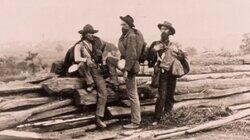
This episode opens with a dramatic account of the turning point of war: the Battle of Gettysburg, the greatest ever fought in the Western Hemisphere. For three days 150,000 men will fight to the death in the Pennsylvania countryside, culminating in Pickett's legendary charge. This extended episode then goes on to chronicle the fall of Vicksburg, the New York draft riots, the first use of black troops, and the western battles at Chickamauga, Georgia and Chattanooga, Tennessee. The episode closes with the dedication of a new Union cemetery at Gettysburg in November, where Abraham Lincoln struggles to put into words what is happening to his people.

Valley of the Shadow of Death (1864)
Episode six begins with a biographical comparison of Ulysses S. Grant and Robert E. Lee and then chronicles the extraordinary series of battles that pitted the two generals against each other from the wilderness to Petersburg in Virginia. In 30 days, the two armies lose more men than both sides have lost in three years of war. With Grant and Lee finally deadlocked at Petersburg, we visit the ghastly hospitals north and south and follow General Sherman's Atlanta campaign through the mountains of north Georgia. As the horrendous casualty lists increase, Lincoln's chances for re-election begin to dim, and with them the possibility of Union victory.

Most Hallowed Ground (1864)
The episode begins with the presidential election of 1864 that sets Abraham Lincoln against his old commanding general, George McClellan. The stakes are nothing less than the survival of the Union itself: with Grant and Sherman stalled at Petersburg and Atlanta, opinion in the North has turned strongly against the war. But 11th-hour victories at Mobile Bay, Atlanta, and the Shenandoah Valley tilt the election to Lincoln and the Confederacy's last hope for independence dies. In an ironic twist, poignantly typical of the Civil War, Lee's Arlington mansion is turned into a Union military hospital and the estate becomes Arlington National Cemetery, the Union's most hallowed ground.
War Is All Hell (1865)
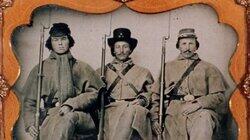
The episode begins with William Tecumseh Sherman's brilliant march to the sea, which brings the war to the heart of Georgia and the Carolinas and spells the end of the Confederacy. In March, following Lincoln's second inauguration, first Petersburg and then Richmond finally fall to Grant's army. Lee's tattered Army of Northern Virginia flees westward towards a tiny crossroads town called Appomattox Court House. There the dramatic and deeply moving surrender of Lee to Grant takes place. The episode ends in Washington where John Wilkes Booth begins to dream of vengeance for the South.

The Better Angels of Our Nature (1865)
This extraordinary final episode of The Civil War begins in the bittersweet aftermath of Lee's surrender and then goes on to narrate the horrendous events of five days later when, on April 14, Lincoln is assassinated. After chronicling Lincoln's poignant funeral, the series recounts the final days of the war, the capture of John Wilkes Booth and the fates of the Civil War's major protagonists. The episode then considers the consequences and meaning of a war that transformed the country from a collection of states to the nation we are today.
Recently Updated Shows

The Creep Tapes
Based on a collection of videotapes in the secret vault of the world's deadliest and most socially uncomfortable serial killer, who hires his victims to film him for the day under false pretenses, each episode exposes a new victim from one of the fabled 'Creep Tapes'.

America's Funniest Home Videos
ABC's longest-running primetime entertainment show, America's Funniest Home Videos, returns for season 36 this fall with the same mission -- giving families something genuinely funny to enjoy together on Sunday nights.
"AFV," the longest-running primetime entertainment show in ABC history, returns for season 36 with the same mission - to provide viewers with hysterical moments that fly by at a dizzying pace.

The Real Housewives of Potomac
Just up the river from our nation's capital lies a hidden gem—Potomac, Maryland. Its rolling hills, gated mansions, sophisticated prep schools, and exclusive country clubs all serve to keep the area invitation-only. Sprinkled throughout this community are a handful of old-line, wealthy African-American families who have historically broken racial barriers to provide a life of privilege for their children. The Real Housewives of Potomac follows the upscale lives of six intriguing, well-to-do women: Gizelle Bryant, Katie Rost, Karen Huger, Charrisse Jackson-Jordan, Robyn Dixon, and Ashley Darby, all of whom have fought for their places in this society by way of legacy or marriage. In a town where entry is granted only through class, pedigree, and lineage, how far will these ladies go to secure their spot at the top of this prestigious circle?

The Traitors Canada
Follow a group of contestants – including some familiar faces – who live together as they complete a series of challenges with the goal of earning a cash prize. The catch? Some of the contestants are traitors who will attempt to deceive and manipulate their way to the prize instead of sharing it amongst the group. In this psychological adventure will the traitors be unmasked in time?
