Human Universe - Season 1
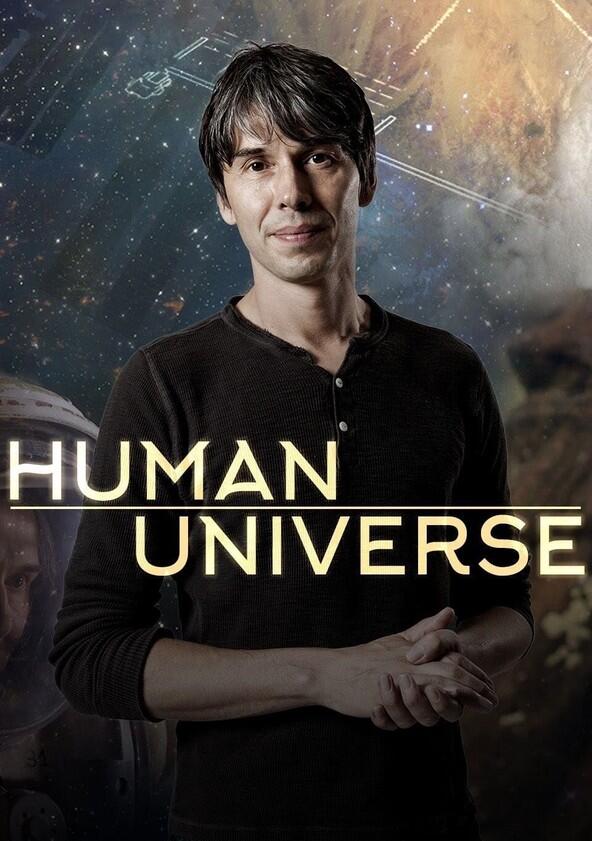
Season 1

Episodes
Apeman - Spaceman
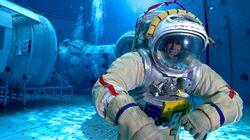
Beginning in Ethiopia, Professor Brian Cox discovers how the universe played a key role in our ascent from apeman to spaceman by driving the expansion of our brains. But big brains alone did not get us to space. To reveal what did, Brian heads out of Africa to the ancient city of Petra in Jordan, where he unpicks the next part of our story - the birth of civilisation - and then on to Kazakhstan, where he witnesses the return of astronauts from space and explains what took us from civilisation to the stars.
Why Are We Here?
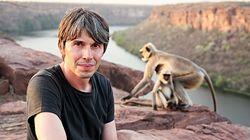
Brian Cox reveals how the wonderful complexity of nature and human life is simply the consequence of chance events constrained by the laws of physics that govern our universe. But this leads him to a deeper question - why does our universe seem to have been set up with just the right rules to create us? In a dizzying conclusion Brian unpicks this question, revealing the very latest understanding of how the universe came to be this way, and in doing so offers a radical new answer to why we are here.
Are We Alone?
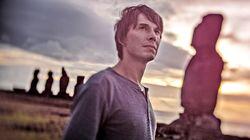
Brian Cox explores the ingredients needed for an intelligent civilisation to evolve in the universe - the need for a benign star, for a habitable planet, for life to spontaneously arise on such a planet and the time required for intelligent life to evolve and build a civilisation. Brian weighs the evidence and arrives at his own provocative answer to the puzzle of our apparent solitude.
A Place in Space and Time
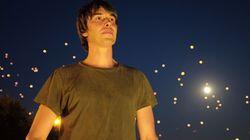
Professor Brian Cox explores our origins, place and destiny in the universe. We all start our lives thinking that we are at the centre of the universe, surrounded by our family and the world as it spins around us. But the urge to explore is strong. Brian tells the story of how our innate human curiosity has led us from feeling that we are at the centre of everything, to our modern understanding of our true place in space and time - that we are living 13.8 billion years from the beginning of the universe, on a mere speck of rock in a possibly infinite expanse of space.
The story begins with Brian climbing to the summit of the spectacular fortified village of Ait-Ben-Haddou in the foothills of Morocco's Atlas Mountains. Here he reveals how, by watching the stars' motion across the night's sky, it was natural for us to believe we were at the centre of everything - a view that held sway for millennia.
It was in Renaissance Venice that our demotion from the centre of the universe began. Here, thanks to the artisan glass-blowers in the city, Galileo was able to build the first telescope and discover our position was not at the centre, rather just one of a number of planets that orbit the sun.
Perhaps the true scale of the universe was most keenly felt by those rare individuals who, for a moment, left our planet behind and headed off into deep space. Astronaut Bill Anders recounts what it was like to see the Earth from this extraordinary vantage point. He tells the story of one of the most famous images in history: his Earthrise photograph taken from lunar orbit in 1968.
Since then, our satellites and telescopes have allowed us to see further into space. We have travelled across light years to see to the edges of our own Milky Way galaxy and beyond, to thousands of other galaxies, all the way to the edge of the visible universe some 46 billion light years away.
Having found our place in space, Brian turns his attention to our location in time. The film follows 19-year-old Souad ait Malik as she leaves her isolated village in the High Atlas to attend the annual marriage festival. For as long as anyone can remember, generations of Berber have returned to this one place to find a partner and so begin the next generation. In the same way, Brian reveals how - as our exploration of the cosmos has deepened - we have even been able to piece together how the universe itself began.
In a powerful conclusion, Brian pieces together this story of creation that started with what Einstein called the 'happiest thought of his life' - the moment that he realised that gravity was far stranger than anyone had imagined. In an incredible experiment inside the largest vacuum chamber, Brian reveals how Einstein formulated a new theory of gravity, which ultimately took us back to the big bang. And how in doing so, we humans found our true place in space and time.
What Is Our Future?
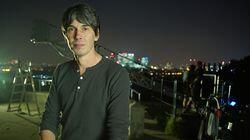
Professor Brian Cox concludes his exploration of our place in the universe by asking what next for the ape that went to space.
In northern Spain, he begins in a cave that was once home to our distant ancestors. Here, he discovers some of the earliest art in the universe - a child's hand painted onto the wall that has remained intact for around 40,000 years. That child - if raised today - would be just as bright and just as capable as any modern child. Yet its vision of the future would be very different to ours.
To understand what sets us apart, Brian heads to the Arctic. In Svalbard, he joins a group of people who are celebrating the midsummer sun. At these latitudes, the sun doesn't set for weeks on end. Brian shows how science is able to precisely predict the future passage of our star in ways our ancestors could not have imagined. The difference is that science has given us a vision of the deep future. It has shown us that we live in a clockwork universe where planets turn around stars in predictable orbits, stars around galaxies and the galaxies themselves are all falling through a probably infinite universe.
But powerful as science is at predicting the motion of the heavens, our future is far from certain. In Florida, Brian joins the latest efforts to protect Earth from potential catastrophic events. He joins a team of Nasa astronauts who are training for a future mission to an asteroid - should we ever discover one coming our way - under 30 feet of water in a submerged laboratory that simulates space. It is just one example of how, for our long-term survival, space exploration may well be vital. It is a view shared by Apollo 16 astronaut Charlie Duke, who tells Brian what it was like to escape the confines of the planet. It is a dream that both Nasa and now commercial companies share as they race to get humans back into deep space.
But space travel, like every leap our civilisation has ever made, requires energy. Here too, scientists are hard at work attempting to safeguard our future. At the National Ignition Facility in California, Brian witnesses the world's most successful fusion experiment in action. He believes that if their mission succeeds, our civilisation will have unlocked a way to the stars that will not destroy the planet in the process.
Brian concludes by returning to the top of the world in Svalbard, where he gains access to our civilisation's greatest treasure, locked away in a vault buried deep in the permafrost.
Recently Updated Shows

The Creep Tapes
Based on a collection of videotapes in the secret vault of the world's deadliest and most socially uncomfortable serial killer, who hires his victims to film him for the day under false pretenses, each episode exposes a new victim from one of the fabled 'Creep Tapes'.

America's Funniest Home Videos
ABC's longest-running primetime entertainment show, America's Funniest Home Videos, returns for season 36 this fall with the same mission -- giving families something genuinely funny to enjoy together on Sunday nights.
"AFV," the longest-running primetime entertainment show in ABC history, returns for season 36 with the same mission - to provide viewers with hysterical moments that fly by at a dizzying pace.

The Real Housewives of Potomac
Just up the river from our nation's capital lies a hidden gem—Potomac, Maryland. Its rolling hills, gated mansions, sophisticated prep schools, and exclusive country clubs all serve to keep the area invitation-only. Sprinkled throughout this community are a handful of old-line, wealthy African-American families who have historically broken racial barriers to provide a life of privilege for their children. The Real Housewives of Potomac follows the upscale lives of six intriguing, well-to-do women: Gizelle Bryant, Katie Rost, Karen Huger, Charrisse Jackson-Jordan, Robyn Dixon, and Ashley Darby, all of whom have fought for their places in this society by way of legacy or marriage. In a town where entry is granted only through class, pedigree, and lineage, how far will these ladies go to secure their spot at the top of this prestigious circle?

The Traitors Canada
Follow a group of contestants – including some familiar faces – who live together as they complete a series of challenges with the goal of earning a cash prize. The catch? Some of the contestants are traitors who will attempt to deceive and manipulate their way to the prize instead of sharing it amongst the group. In this psychological adventure will the traitors be unmasked in time?
